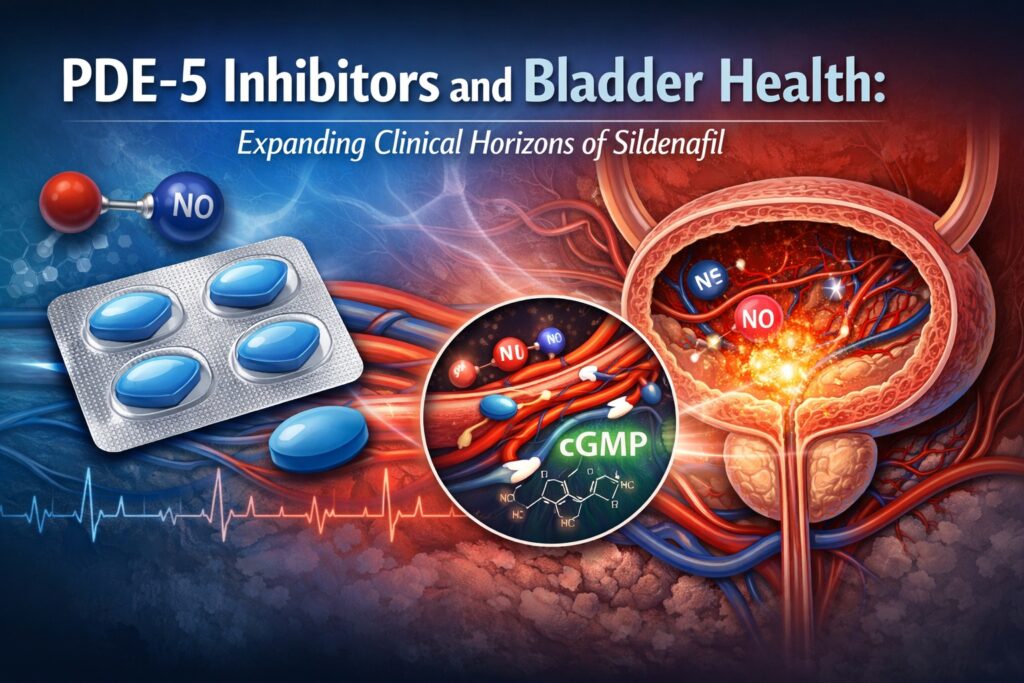
Introduction: From Erectile Physiology to Urological Microcirculation
Phosphodiesterase-5 (PDE-5) inhibitors were originally introduced into clinical practice as a revolutionary therapy for erectile dysfunction. Over time, however, their pharmacological relevance has extended far beyond the penile vasculature. Increasing evidence indicates that these agents—particularly sildenafil and tadalafil—exert important regulatory effects on vascular smooth muscle throughout the body. Among the emerging areas of interest is the microcirculation of the urinary bladder, a vascular network that plays a critical role in lower urinary tract function.
The bladder is often perceived primarily as a muscular reservoir, but its physiological function depends heavily on adequate blood supply. The bladder wall contains a dense vascular network that supports the metabolic activity of detrusor muscle, urothelial cells, and local neural structures. Disturbances in perfusion may contribute to a spectrum of lower urinary tract symptoms (LUTS), including urgency, frequency, and impaired voiding. In this context, agents that improve vascular tone and microcirculatory dynamics have become an area of intense pharmacological interest.
Recent experimental investigations demonstrate that PDE-5 inhibitors can enhance nitrergic nerve-mediated vasorelaxation in bladder blood vessels. This mechanism suggests that these medications may improve local blood flow and thereby support bladder physiology. Such findings offer a compelling explanation for the beneficial effects of PDE-5 inhibitors observed in certain urological disorders. Understanding these mechanisms requires a closer examination of nitric oxide signaling, vascular regulation, and the pharmacodynamics of PDE-5 inhibition.
The Nitric Oxide–cGMP Pathway in Urological Vascular Regulation
Nitric oxide (NO) is a central signaling molecule in vascular biology. Produced by nitric oxide synthase (NOS) enzymes, NO diffuses rapidly into adjacent smooth muscle cells where it activates soluble guanylate cyclase. This enzyme catalyzes the formation of cyclic guanosine monophosphate (cGMP), a second messenger that promotes relaxation of vascular smooth muscle. The result is vasodilation and increased tissue perfusion.
Within the urinary bladder, nitrergic nerves form an essential component of autonomic regulation. These nerves release nitric oxide as a neurotransmitter, particularly during phases of bladder filling and relaxation. The nitrergic system influences both detrusor smooth muscle and the vasculature supplying the bladder wall. Adequate nitrergic signaling therefore supports the functional balance between bladder storage and emptying.
However, cGMP signaling is tightly regulated by phosphodiesterase enzymes. Phosphodiesterase-5 (PDE-5) specifically hydrolyzes cGMP into inactive metabolites, effectively terminating the vasodilatory signal. When PDE-5 activity is high, the relaxation induced by nitric oxide is limited. Conversely, inhibition of PDE-5 prolongs cGMP signaling, amplifying and sustaining smooth muscle relaxation.
In the bladder vasculature, this biochemical cascade has important implications. Enhanced nitrergic signaling can improve microvascular dilation, thereby increasing blood flow to bladder tissues. Adequate perfusion ensures oxygen delivery, metabolic support, and proper functioning of local neural networks. Thus, modulation of the NO–cGMP pathway by PDE-5 inhibitors represents a powerful pharmacological strategy for influencing bladder physiology.
Mechanism of Action of PDE-5 Inhibitors
PDE-5 inhibitors act by selectively blocking the enzymatic degradation of cyclic guanosine monophosphate. By preventing the breakdown of cGMP, these drugs amplify the natural vasodilatory effects of nitric oxide. The resulting accumulation of cGMP leads to relaxation of smooth muscle cells in vascular walls and other tissues containing PDE-5.
Sildenafil, one of the first agents in this class, demonstrates high affinity for the PDE-5 enzyme while maintaining relatively low activity against other phosphodiesterase isoforms. This selectivity contributes to its clinical efficacy and safety profile. When nitrergic nerves release nitric oxide, sildenafil allows the signal to persist longer, producing a stronger and more sustained relaxation of smooth muscle.
Although sildenafil is most widely recognized for its role in erectile dysfunction therapy, the distribution of PDE-5 extends beyond the penile corpus cavernosum. The enzyme is expressed in multiple tissues, including pulmonary vasculature, systemic blood vessels, and components of the urinary tract. Consequently, PDE-5 inhibition can influence physiological processes in several organ systems.
Experimental pharmacological studies have demonstrated that sildenafil and tadalafil can significantly potentiate nitrergic nerve-mediated relaxation in the blood vessels supplying the bladder. This effect appears to depend on intact nitric oxide signaling, suggesting that PDE-5 inhibitors function as amplifiers rather than initiators of vascular relaxation. In other words, these drugs enhance the body’s own regulatory mechanisms rather than replacing them.
Bladder Perfusion and Lower Urinary Tract Function
Adequate blood supply to the bladder is essential for maintaining normal urinary function. The detrusor muscle requires a continuous supply of oxygen and nutrients to sustain its contractile activity. Similarly, the urothelium—once thought to be merely a passive barrier—is now recognized as a metabolically active tissue involved in sensory signaling and local regulation of bladder function.
Reduced bladder perfusion has been associated with several pathological conditions affecting the lower urinary tract. Chronic ischemia can lead to structural and functional changes in bladder tissues, including detrusor overactivity, impaired compliance, and alterations in sensory pathways. These changes may contribute to symptoms such as urinary urgency, frequency, and nocturia.
Age-related vascular changes represent one important factor influencing bladder blood flow. Atherosclerosis, endothelial dysfunction, and reduced nitric oxide availability may compromise microcirculatory dynamics. As perfusion decreases, tissues become more susceptible to oxidative stress and inflammatory processes. Over time, these changes can impair the functional capacity of the bladder.
The potential ability of PDE-5 inhibitors to improve bladder perfusion therefore holds considerable therapeutic promise. By enhancing nitrergic vasodilation in bladder blood vessels, these agents may counteract ischemic processes and support normal physiological function. Improved blood flow may help preserve tissue integrity, maintain neural signaling, and optimize detrusor performance.
Experimental Evidence: PDE-5 Inhibition and Nitrergic Relaxation
Recent pharmacological research has provided valuable insights into the interaction between PDE-5 inhibitors and bladder vascular physiology. Experimental models examining bladder arteries and microvascular structures reveal that electrical stimulation of nitrergic nerves produces measurable vasorelaxation. This response is mediated primarily through nitric oxide release and subsequent activation of the cGMP signaling pathway.
When PDE-5 inhibitors such as sildenafil or tadalafil are introduced, the magnitude of this nitrergic relaxation increases significantly. The drugs do not initiate relaxation independently; rather, they enhance the effect of endogenous nitric oxide. This observation supports the concept that PDE-5 inhibitors function as signal amplifiers within the NO–cGMP cascade.
Pharmacological experiments have also shown that blocking nitric oxide synthesis markedly reduces the vasodilatory effect observed with PDE-5 inhibition. This finding confirms that the enhanced relaxation depends on nitrergic nerve activity. Without nitric oxide release, the presence of PDE-5 inhibitors produces minimal vascular response.
These results highlight the importance of intact neural and endothelial signaling in mediating the therapeutic effects of PDE-5 inhibitors. The drugs operate within an existing physiological framework, strengthening natural mechanisms rather than replacing them. Such a mode of action may explain the relatively favorable safety profile associated with PDE-5 inhibitors in clinical use.
Sildenafil Beyond Erectile Dysfunction
Although sildenafil gained worldwide recognition as a treatment for erectile dysfunction, its pharmacological potential extends far beyond sexual medicine. Over the past two decades, clinicians have explored its utility in conditions such as pulmonary hypertension, Raynaud’s phenomenon, and various vascular disorders. The emerging evidence regarding bladder vascular regulation adds another dimension to its therapeutic repertoire.
In urology, sildenafil has already demonstrated clinical benefits in men with lower urinary tract symptoms associated with benign prostatic hyperplasia (BPH). Improvements in symptom scores and quality of life have been observed in several clinical studies. While the precise mechanisms remain under investigation, enhanced blood flow to pelvic organs is believed to contribute significantly to these effects.
Improved microcirculation may also influence neural signaling within the bladder wall. Adequate perfusion supports the function of afferent sensory fibers and autonomic nerves involved in bladder control. By facilitating nitrergic signaling and vascular relaxation, sildenafil may indirectly stabilize neural pathways that regulate urinary storage and voiding.
Furthermore, the anti-inflammatory and endothelial-protective effects associated with increased nitric oxide signaling may provide additional benefits. Enhanced cGMP activity can reduce oxidative stress and improve endothelial function, factors that play critical roles in vascular health. Thus, sildenafil’s influence on bladder physiology likely reflects a combination of vascular, neural, and cellular mechanisms.
Clinical Implications and Future Therapeutic Perspectives
The recognition that PDE-5 inhibitors influence bladder vascular function has significant clinical implications. Lower urinary tract symptoms represent a major health concern worldwide, particularly in aging populations. Traditional therapies focus primarily on smooth muscle relaxation within the prostate or bladder. However, these approaches do not directly address potential vascular contributions to urinary dysfunction.
By targeting the NO–cGMP pathway, PDE-5 inhibitors offer a complementary mechanism of action. Enhanced blood flow may improve tissue oxygenation, reduce ischemic stress, and support normal physiological signaling within the bladder. This vascular perspective introduces a new dimension to the management of urinary disorders.
Potential therapeutic benefits include:
- Improved bladder perfusion and oxygen delivery
- Enhancement of nitrergic neural signaling
- Stabilization of detrusor muscle function
- Possible reduction in ischemia-related bladder dysfunction
While current evidence is promising, further research is needed to clarify the long-term clinical significance of these mechanisms. Controlled clinical trials will help determine whether improvements in bladder microcirculation translate into meaningful outcomes for patients with LUTS, overactive bladder, or ischemic bladder conditions.
Future studies may also explore combination therapies involving PDE-5 inhibitors and other pharmacological agents. For example, integrating vascular modulation with established treatments targeting muscarinic receptors or adrenergic pathways could produce synergistic benefits. Such strategies reflect an evolving understanding of bladder physiology as an integrated vascular-neural system rather than a purely muscular organ.
FAQ
1. What are PDE-5 inhibitors and how do they work?
PDE-5 inhibitors are medications that block the enzyme phosphodiesterase-5, which normally breaks down cyclic guanosine monophosphate (cGMP). By inhibiting this enzyme, drugs such as sildenafil increase cGMP levels, leading to relaxation of smooth muscle and dilation of blood vessels. This mechanism enhances nitric oxide signaling and improves blood flow in various tissues.
2. Why is sildenafil relevant to bladder function?
Although sildenafil is best known for treating erectile dysfunction, PDE-5 enzymes are also present in the blood vessels supplying the urinary bladder. By enhancing nitric oxide–mediated vasodilation, sildenafil can improve bladder blood flow and potentially support normal urinary function.
3. Can PDE-5 inhibitors help with lower urinary tract symptoms?
Clinical studies suggest that PDE-5 inhibitors may improve symptoms such as urinary frequency, urgency, and weak urinary stream, particularly in men with benign prostatic hyperplasia. These benefits may result from improved pelvic blood flow and enhanced neural signaling within the urinary tract.
4. Are PDE-5 inhibitors safe for long-term use?
PDE-5 inhibitors, including sildenafil, have been widely studied and are generally considered safe when prescribed appropriately. However, they may interact with certain medications—particularly nitrates—and should only be used under medical supervision. Long-term safety continues to be evaluated in ongoing clinical research.